
Seattle’s damp weather makes garages inviting for mice, rats, spiders, ants, and moisture loving insects. Once they get inside, they chew wiring, nest in storage bins, and track dirt into your home. The biggest entry point is usually the garage door itself. The good news is that a few targeted upgrades and better housekeeping will seal the obvious gaps and make your garage a far less attractive target. This guide covers the best products and practices for a clean, rodent resistant garage.
Know How Pests Get in
Rodents need only a quarter inch gap to squeeze through. Common entry points include:
-
A flattened or cracked bottom seal that no longer meets the floor
-
Uneven concrete creating daylight under the corners
-
Torn side weatherstrips or missing top seal at the header
-
Gaps around the vertical tracks and jambs where trim has warped
-
Unscreened wall vents, utility penetrations, and weep holes
-
Door panels with rusted edges or delamination that create micro openings
Before you buy products, close the door on a bright day and look for light leaks. Mark each spot with painter’s tape. Those are your priorities.
Choose the Right Bottom Barrier
Standard Vinyl Bottom Seal
A budget friendly fix for mild gaps. It slides into the retainer on most steel doors. Choose a thick, ribbed profile that stays flexible in cool weather and resists flattening.
Heavy Duty U or T Bulb Seal
Better for uneven floors. The extra material compresses into low spots and bounces back. Measure the retainer width carefully so the new seal fits snugly.
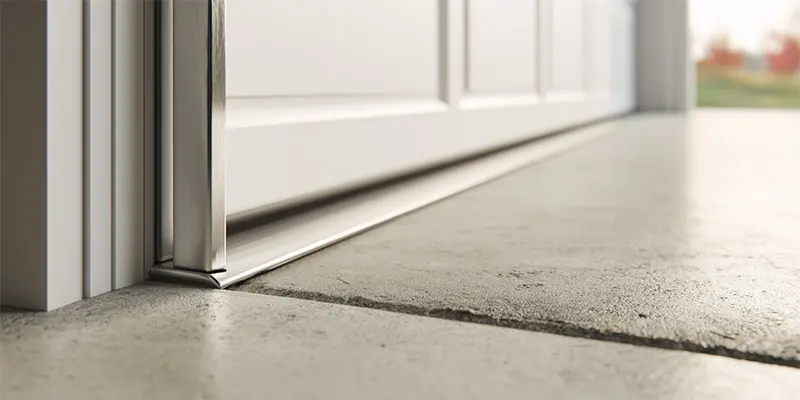
Aluminum Threshold with Adhesive
Great for larger dips or where wind driven rain creeps inside. The threshold glues to the floor and creates a raised, straight landing zone so the bottom seal seats evenly. Clean and etch concrete first for strong adhesion.
If your slab has a deep channel or multiple low points, combine a floor threshold with a fresh bottom seal. For more ideas on handling airflow and water at the slab, review the steps in this guide on how to seal garage door gaps.
Side and Top Weatherstripping That Actually Seals
Replace brittle vinyl with UV stabilized, flexible seals that maintain contact without binding the door. Look for:
-
Wide fins with a soft feathered tip to follow minor wall waves
-
Pre drilled aluminum carriers that fasten securely into studs
-
Color matched options to keep the upgrade looking intentional
Install the top header seal with the door closed so the flap kisses the panel evenly across the width. On the sides, work from top to bottom, checking for uniform contact as you go.
Brush Seals for Stubborn Gaps and Critter Control
Where vinyl drags or leaves micro gaps, brush seals shine. Dense polypropylene bristles mounted in an aluminum holder fill irregular surfaces along the jambs and even the bottom edge if your driveway is rough. Brush seals are excellent at deterring mice and spiders because they eliminate the firm edge rodents prefer to push against.
Use short sections around hinges and irregular trim, then overlap the bristles at joints so there is no pinhole path.
Vent and Penetration Protection
-
Foundation and wall vents: Add fine stainless or galvanized mesh screens that block rodents and insects while preserving airflow.
-
Utility penetrations: Seal around conduit and pipes with exterior rated silicone or expanding foam labeled for pest resistance.
-
Door panel weep holes: Ensure factory weeps remain open for drainage, but consider a micro mesh insert if insects are entering there.
Keep the Door Itself in Good Shape
Pests exploit weakness. Repair these issues professionally:
-
Rusting bottom edges invite gaps as metal thins. Sand, prime with a rust inhibitor, and repaint. If corrosion is widespread, schedule panel repair before holes open up.
-
Loose hinges create misalignment, which widens side gaps. Tighten hardware and replace cracked hinges.
-
Worn rollers allow panels to wobble, breaking the seal at the jambs. Upgrading to sealed nylon rollers quiets the door and keeps it tracking tight. If you are considering that upgrade, this step by step article on how to replace garage door rollers explains the process and safety notes.
Housekeeping That Denies Food and Shelter
-
Store pet food and bird seed in sealed bins made of metal or thick plastic with locking lids.
-
Elevate cardboard boxes onto shelves and switch to lidded totes. Cardboard is both nesting material and odor friendly.
-
Declutter corners so you can see fresh droppings or gnaw marks early.
-
Sweep and mop seasonally to remove scent trails.
-
Trim vegetation that touches the garage walls and acts as a bridge.
If insects are your main concern during warm months, a clean floor, fixed gaps, and targeted traps can help. When occasional crickets wander in during summer, this guide on how to get rid of crickets in the garage offers simple remedies that pair well with sealing.
Moisture Control Limits Bugs
Most pests love damp conditions. Address water first:
-
Check gutter downspouts and slope the grade so water flows away from the door.
-
Install a driveway drain where heavy rain consistently pools at the threshold.
-
Use a dehumidifier in very damp garages to keep relative humidity below 55 percent.
-
Replace cracked bottom seals that wick rainwater onto the slab.
Less moisture means fewer ants, fewer spiders, and less mold on weatherstripping.
Installation Tips for a Tight, Long Lasting Seal
-
Work with the door closed so you can see contact points in real time.
-
Clean surfaces thoroughly. Degrease the slab and wipe jambs before installing new seals or thresholds.
-
Pre drill aluminum carriers and anchor into studs, not just sheathing.
-
Stagger joints in long runs so seams are not aligned at the same height on both sides.
-
Test the door by hand after each step to ensure smooth movement and no binding.
-
Finish with silicone at corners where the header seal meets the side seals.
Seasonal Inspection Checklist
-
Look for daylight at corners and along the bottom after heavy rain
-
Check for chew marks on seals and caulk
-
Confirm the bottom seal is still soft and rebounds after compression
-
Re caulk small gaps at the jambs and around penetrations
-
Wipe mold or algae from seals with a mild cleaner so they stay supple
-
Tighten any loose weatherstrip carriers
When to Call a Professional
-
The slab is uneven enough that thresholds alone cannot close the gap
-
The door rubs the seals or binds when closing
-
Lift cables or springs show wear while you are inspecting the edges
-
You want to add brush seals around unique trim or irregular masonry
-
Rodent activity continues despite good sealing and housekeeping
A professional can realign tracks, balance springs, and fine tune seals so they touch consistently without adding drag that strains the opener.
FAQs
Will rodents chew through vinyl seals
They can, but they prefer easier paths. Properly fitted seals combined with brush edges and closed food sources usually stop attempts before they start.
Do brush seals make the door harder to close
Not if sized and installed correctly. Dense bristles create contact without heavy friction.
Is a threshold a tripping hazard
Quality thresholds have low ramp profiles and beveled edges. Choose a size appropriate to your gap and paint a contrasting stripe if visibility is a concern.
How long do seals last
Expect three to five years for vinyl in Seattle’s climate, longer for high quality formulations. Brush seals often outlast vinyl because bristles do not harden.
Can I combine vinyl and brush
Yes. Use vinyl for weather protection at the bottom and brush along the sides for rodent control and irregular surfaces.
Key Takeaways
-
Block entry points with fresh bottom seals, quality side and top weatherstrips, and brush seals where surfaces are uneven
-
Add a threshold on wavy slabs to create a consistent landing edge
-
Screen vents and seal utility penetrations so pests cannot bypass the door
-
Reduce attractants by storing food in sealed bins, decluttering, and managing moisture
-
Inspect each season and touch up seals before small gaps become a highway for pests
A tight, dry, and well maintained garage door is your best defense against rodents and insects. With the right seals and smart storage, your garage will stay cleaner, healthier, and better protected year round.