
C
Add as a Preferred Source on Google
Add chsgaragerepair.com as a Preferred Source to see more of their content on Google Search.
AddSeattle garages come in all shapes and sizes. Alley garages with low ceilings, compact ADUs, shops filled with kayaks and bike racks, and townhomes where living spaces sit right above the garage. In many of these layouts, a traditional ceiling-mounted opener gets in the way, vibrates too much, or leaves no room for storage. That is where a jackshaft garage door opener shines. This side-mounted system frees up headroom, runs quietly, and pairs beautifully with high-lift track setups common in modern remodels.
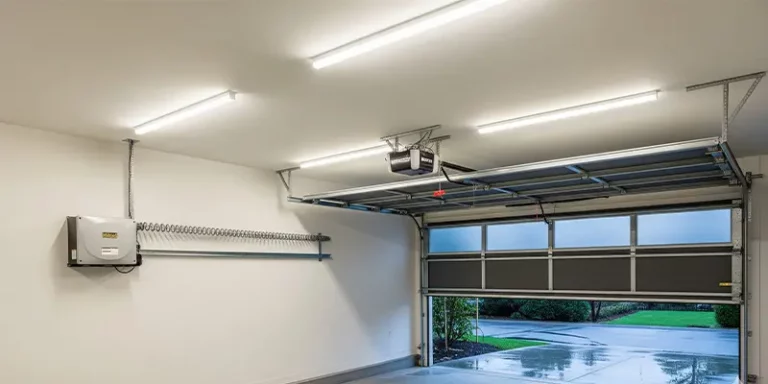
Use this guide to decide if a jackshaft is right for your home, understand what it takes to install one safely, and learn the maintenance habits that keep it smooth for years.
A jackshaft opener mounts to the wall beside the door and connects directly to the torsion shaft. Instead of pulling a chain or belt along a rail, it turns the shaft that your springs already use to lift the door. The result is a cleaner ceiling, fewer moving parts overhead, and a compact footprint on the side wall.
Low headroom garages where a rail would hit lights, ducts, or beams
High-lift conversions that need every inch of vertical space for a car lift, shelving, or kayaks
Townhomes and ADUs where sleeping areas sit directly above the garage
Detached workshops where a clear ceiling makes it easier to hang tools or lighting
Historic homes that you want to keep visually tidy without a rail crossing the center
A DC motor with a precision gear reducer turns the torsion shaft through a coupler. Sensors monitor cable tension and door position. When you tap the remote or app, the motor rotates the shaft, which winds or unwinds the lift cables on the drums. Soft-start and soft-stop logic bring the door up to speed gently, then slow it before it settles at the floor for a quiet close.
Torsion spring system
Jackshaft openers require torsion springs and a continuous torsion shaft. If your door uses extension springs, your technician will recommend converting to torsion.
Solid side wall and shaft clearance
You need side room beside the door to mount the unit and a rigid surface for lag bolts. Most homes have enough space on at least one side.
Proper end bearing plates and drums
Worn bearings or mismatched drums create wobble and noise. A pro will replace tired parts before coupling the motor to the shaft.
Cable tension sensor
For safety, many jackshaft systems include a tension monitor that stops the motor if a cable slackens.
Power outlet at the head height
Plan a dedicated outlet near the unit. An electrician can add one if needed.
Photo-eye sensors and manual release
Just like rail systems, you still use photo-eyes near the floor and a manual release for emergencies.
Maximum headroom with a clear ceiling for storage, lights, or a car lift
Quieter living spaces thanks to fewer vibrations transferred through the ceiling
Cleaner look without a center rail and hanging hardware
Smart features like app control, geofencing, schedules, and real-time alerts
Strong lifting torque that pairs well with tall or heavy insulated doors
Low maintenance since there is no chain or belt rail to keep aligned
If you want a comparison of traditional rail drives before you commit, skim this overview of the differences between a belt vs chain garage door opener. It will help you understand why a side-mount is a different animal altogether.
Upfront cost is higher than many rail systems
Requires torsion springs which some older doors do not have yet
Needs side clearance that very narrow jambs may lack
Professional setup is strongly advised due to spring tension and safety sensors
Price depends on your door’s size and weight, the opener model, and whether the door needs spring or hardware changes first. CHS opener installation starts at $549. Jackshaft openers, and any work the door needs to take one, are quoted on a free estimate after we see your garage.
Jackshaft opener with smart control: free estimate
Torsion conversion on an extension-spring door: free estimate (a jackshaft opener mounts on the torsion spring shaft)
High-lift track conversion: free estimate, depending on lift height and new drums
A trustworthy estimate will itemize parts, labor, safety upgrades, and any code-required electrical work.
PRICING DISCLAIMER – STARTING PRICES SUBJECT TO INSPECTION
All advertised Starting At prices represent base pricing for standard services, products, or installations under typical conditions and are provided for general informational purposes only. Such prices are not guaranteed final quotes and are subject to adjustment following an on-site inspection and evaluation by a qualified technician.
Final pricing may vary based on several factors, including, but not limited to, door size, type, weight, configuration, installation complexity, existing conditions, required labor, product availability, material specifications, and differences in product brands, grades, quality, or performance.
Additional charges may apply when an inspection identifies necessary repairs, adjustments, replacement components, additional labor, unforeseen complications, concealed defects, safety concerns, or other conditions affecting the proper, safe, and reliable operation of the garage door system.
Certain products, components, or services may be required to ensure proper functionality, compatibility, and safe operation, while others may be optional upgrades or enhancements selected at the customer’s discretion.
Any additional work or charges beyond the originally quoted scope will be disclosed to the customer for review and approval before such additional work is performed.
All final pricing is subject to the customer’s approval of a written estimate outlining the applicable services, materials, and associated costs before work begins. No advertised starting price shall be construed as a binding offer or guarantee of the final service price.
Noise and vibration
A jackshaft’s motor is on the wall, not the ceiling, so there is less vibration reaching upstairs rooms. DC motors are inherently quieter than older AC units.
Space and aesthetics
No center rail means unobstructed ceiling space and cleaner lines. That space is Reliable for LED strips, attic access, or overhead racks.
Lift performance
Side-mount torque is excellent for tall high-lift doors. With standard doors it feels smooth and controlled rather than efficient and jerky.
Smart features
Most current models ship with Wi-Fi, app control, and integration with voice assistants. If you are weighing options across all opener styles, this deep dive on how to choose the best garage door opener is a helpful companion.
Photo-eye sensors that reverse on obstruction
Automatic force control that adapts to temperature and door weight changes
Cable tension monitor that halts if slack is detected
Posi-lock or deadbolt that engages when the door reaches the floor
Battery backup on select models so you can operate during outages
Vacation lock mode to disable remote signals when you travel
Plan for moisture
Choose corrosion-resistant hardware and keep seals in good shape. The side-mount location stays drier than ceiling rails, which helps electronics last.
Mind alley access
If your garage opens to a narrow alley, a soft-start helps protect pedestrians and cyclists while keeping operation smooth.
Think storage
Use the freed headroom for safe bike hoists, kayak cradles, or seasonal racks. Measure clearances so nothing swings into the door path.
Add lighting
A rail-free ceiling lets you position linear LEDs exactly where you need visibility for projects and parking lines.
Inspection and balance check
The technician verifies door weight, balance, spring condition, and hardware health.
Hardware refresh if needed
End bearings, drums, or cables are replaced if worn. This is the best time to upgrade to sealed rollers.
Mounting and coupling
The opener is lagged into studs, aligned to the shaft, and connected with a coupler.
Sensor and wiring setup
Photo-eyes are aligned and the cable tension sensor is calibrated. Low-voltage wiring is routed neatly.
Programming and testing
Travel limits, force, and smart app features are programmed. The door is tested multiple times for smooth movement and safety reversals.
Owner walk-through
You learn the manual release, vacation lock, and battery backup checks. The technician will also review basic upkeep.
Quarterly wipe-down to keep dust off the motor housing and sensors
Annual tune-up to check balance, cable condition, and bearings
Lubrication of hinges and rollers every few months with garage-safe lubricant
Battery check if your model includes backup power
App updates so security and features stay current
A well installed jackshaft opener paired with a balanced door often runs quietly for a decade or more with minimal intervention.
Can any garage door use a jackshaft
Your door must have a torsion spring system and a continuous shaft. Very low side clearances may require creative mounting or a different solution.
Is a jackshaft safe with tall high-lift tracks
Yes. In fact, it is often the preferred drive because it keeps the ceiling clear and delivers strong, controlled torque to tall doors.
Will it work during a power outage
Choose a model with battery backup to get multiple cycles when the grid is down.
Can I install it myself
Because torsion springs are under high tension, this upgrade is best handled by a trained technician.
Will it fit behind built-in shelves
If you have enough room beside one jamb and a clear line to the shaft, it can. Your installer will measure and confirm.
Choose a jackshaft opener if you need headroom, want a quieter home office or bedroom above the garage, or plan to add high-lift tracks for storage or a car lift. The cleaner look, smart features, and low vibration make it a strong upgrade for many Seattle homes. If you are unsure, an on-site assessment will confirm spring type, clearances, and the best mounting location.
Most sectional doors with torsion springs can. Doors with extension springs, one-piece doors and some low-headroom tracks usually cannot. A technician checks the spring type, shaft length and wall space beside the door first.
Yes. The motor turns the torsion shaft directly, with no chain or belt running along the ceiling, so there is less noise and vibration in rooms above the garage.
Yes. It mounts on the wall beside the door, so the ceiling stays clear for storage racks, a car lift or high-lift tracks.
Call CHS Garage Repair at (206) 245-5495 or send us a message with what you’re seeing. We’ll talk through the next steps and provide a written estimate before work begins.
Add chsgaragerepair.com as a Preferred Source to see more of their content on Google Search.
Add