
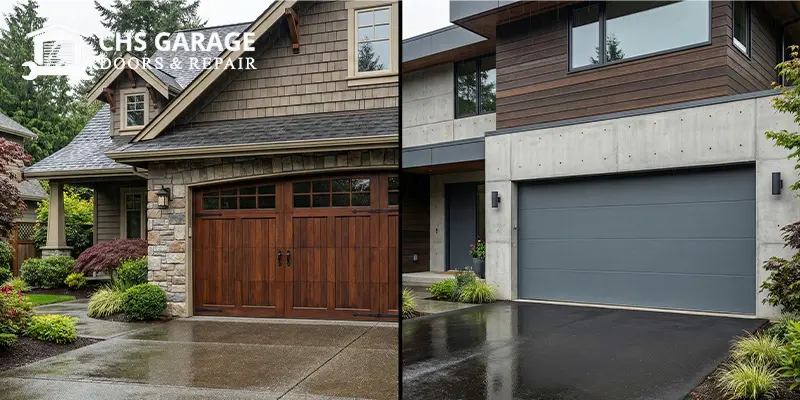
Choosing a new garage door in Seattle is a tug-of-war between curb appeal and climate reality. On one hand, nothing matches the warmth and historic charm of a custom cedar carriage house door on a Craftsman bungalow. On the other hand, Seattle’s relentless drizzle, salt air, and damp winters can turn natural wood into a maintenance nightmare if not properly protected.
For homeowners debating between the classic beauty of wood and the modern durability of steel, the decision comes down to how much maintenance you are willing to perform and how well the door needs to insulate your garage. This guide compares the two most popular materials head-to-head to help you decide which is the better investment for your Pacific Northwest home.
Wood Garage Doors: Dependable Beauty, High Maintenance
Real wood doors are the gold standard for aesthetics. They offer depth, texture, and customization options that stamped metal simply cannot replicate. In Seattle neighborhoods like Queen Anne or Capitol Hill, they add significant historic value.
-
The Pros:
-
Curb Appeal: Genuine grain patterns and rich stain colors create a high-end look.
-
Customization: Wood can be carved, milled, and designed to fit unique arched openings or non-standard sizes.
-
Durability (Impact): Solid wood is heavy and withstands minor bumps better than thin gauge steel, though it can scratch.
-
-
The Cons in Seattle:
-
Moisture Damage: Wood absorbs water. Without regular sealing, it swells, warps, and rots. Bottom sections are particularly vulnerable to splashback from wet driveways.
-
Weight: Wood doors are significantly heavier, requiring robust springs and a powerful opener. If you are curious about the mechanics, check our article on how much do garage doors weigh to see why hardware upgrades are often needed.
-
Maintenance: In Seattle, you will need to refinish, stain, or paint a wood door every 1–2 years to prevent graying and rot.
-
Steel Garage Doors: the Practical Workhorse
Steel is the most popular choice in the region for a reason. Modern steel doors are built to withstand the elements, require very little upkeep, and can even mimic the look of wood through high-definition grain impressions and composite overlays.
-
The Pros:
-
Weather Resistance: Galvanized steel stands up to rain and wind without warping or cracking.
-
Insulation: Steel doors are designed with sandwich construction (steel-insulation-steel), offering high R-values that keep your garage warm in winter.
-
Cost: Generally more affordable than custom wood, with lower long-term maintenance costs.
-
-
The Cons in Seattle:
-
Corrosion: While they don’t rot, steel can rust if the protective coating is scratched, especially near saltwater. If you spot orange flakes on your existing door, learn how to remove rust from a garage door efficiently to stop it from spreading.
-
Dents: Lower-gauge (thinner) steel can dent easily from errant basketballs or bike handles.
-
The “Faux Wood” Compromise
For Seattle homeowners who want the look of wood without the sanding and staining, composite or “wood-look” steel is the sweet spot. These doors use a steel core for strength and insulation, topped with a composite polymer cladding molded from real wood pieces. They resist rot, moisture, and insects while delivering the visual warmth of cedar or mahogany.
Insulation Factor: Steel Wins
If your garage is attached to your home or you use it as a gym or workshop, insulation is key. Steel doors with polyurethane foam injection fill every crevice of the panel, providing High Quality thermal protection compared to solid wood, which has natural insulating properties but often lacks the airtight seals of modern manufactured doors.
Verdict: Which Is Right for You?
-
Choose Wood If: You have a historic home, a flexible budget, and you are committed to annual maintenance (or hiring someone to do it). The aesthetic payoff is undeniable.
-
Choose Steel If: You want a “set it and forget it” solution. A high-quality insulated steel door with a wood-grain finish offers 90% of the visual appeal with 10% of the work.
Key Takeaways
-
Wood offers Competitive style but demands strict maintenance in damp climates.
-
Steel provides High Quality insulation and weather resistance for a lower cost.
-
Composite overlays offer a durable middle ground with the look of wood and the strength of steel.
-
Consider the weight difference; wood doors may require opener and spring upgrades.
-
Rust is the enemy of steel; rot is the enemy of wood. Choose your battle based on your lifestyle.