
C
Add as a Preferred Source on Google
Add chsgaragerepair.com as a Preferred Source to see more of their content on Google Search.
AddSeattle’s wet winters, salty coastal air, and occasional driveway bumps mean garage door panels take a beating. A single cracked section might look cosmetic, yet moisture can creep in, insulation can fail, and curb appeal can nosedive. Choosing between a focused panel repair and a full door replacement depends on damage extent, material age, and long-term cost. This guide breaks down decision factors, what affects the cost, repair methods, and preventive steps so you can protect your investment and keep your door running smoothly.
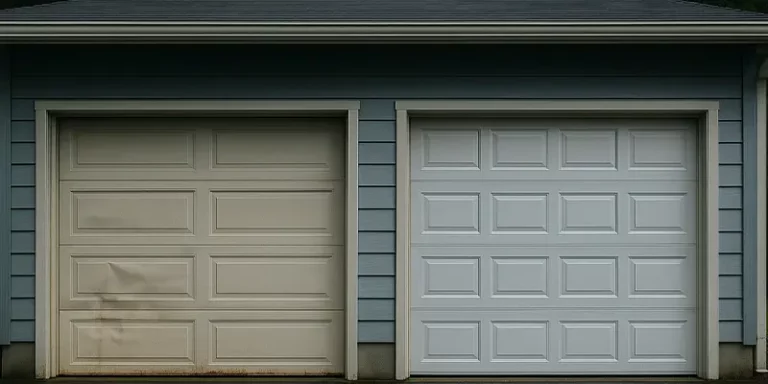
Small aluminum or steel dents often come from rogue basketballs or minor impacts. Simple DIY fixes like wood-block tapping or boiling-water techniques work on light metal doors.
Cracks in wood or composite panels let rainwater swell fibers and undermine structural integrity. Repeated moisture exposure can push sections off track and strain hinges.
Salt-laden mist from Puget Sound accelerates corrosion on uncoated steel. Galvanized steel or aluminum panels resist rust far longer.
A compromised outer skin allows soaked insulation to slump, slashing R-value and spiking energy bills.
| Scenario | Recommended Action | Why |
|---|---|---|
| Single dented steel panel with no rust | DIY or professional reshaping | efficient, low cost |
| One or two bent sections younger than 5 years | Individual panel swap | Keeps door warranty intact |
| Paint fade or light surface rust | Sand, prime, repaint | New paint extends life and costs far less than new door |
Panel replacement is quoted on a free estimate. The price depends on whether a matching panel is still made for your door, its size and material, and how much labor the swap takes.
For how CHS handles a damaged panel, see our garage door panel repair guide.
Damage affects more than 30 percent of sections
Door older than 15 years, nearing end of typical lifespan.
Insulation is outdated polystyrene and you need higher R-value for an attached garage.
Wood panels warped beyond planing, causing binding in tracks.
Repair estimate exceeds 50 percent of a comparable new door.
New garage doors from CHS start at $1,299. Standard doors typically run $1,299–$3,499 and mid-range doors $3,500–$6,549. Premium glass and custom designs are quoted on a free estimate.
Zinc-coated steel panels shrug off rust if the finish stays intact. Choose 24-gauge for dent resistance.
Naturally rustproof and modern looking, aluminum frames with tempered glass brighten workspaces. They cost more upfront but handle rain with minimal upkeep.
Wood-grain composite resists swelling better than solid cedar and accepts paint well.
Foam bonds to steel skins, boosting stiffness and thermal performance while quieting operation.
| Item | CHS price | Notes |
|---|---|---|
| Single panel replacement | Free estimate | Depends on whether a matching panel is still made for your door |
| Standard new door | $1,299–$3,499 | Standard designs and sizes |
| Mid-range new door | $3,500–$6,549 | Upgraded styles, insulation or windows |
| Premium glass or custom door | Free estimate | Depends on size, frame and glass type |
PRICING DISCLAIMER – STARTING PRICES SUBJECT TO INSPECTION
All advertised Starting At prices represent base pricing for standard services, products, or installations under typical conditions and are provided for general informational purposes only. Such prices are not guaranteed final quotes and are subject to adjustment following an on-site inspection and evaluation by a qualified technician.
Final pricing may vary based on several factors, including, but not limited to, door size, type, weight, configuration, installation complexity, existing conditions, required labor, product availability, material specifications, and differences in product brands, grades, quality, or performance.
Additional charges may apply when an inspection identifies necessary repairs, adjustments, replacement components, additional labor, unforeseen complications, concealed defects, safety concerns, or other conditions affecting the proper, safe, and reliable operation of the garage door system.
Certain products, components, or services may be required to ensure proper functionality, compatibility, and safe operation, while others may be optional upgrades or enhancements selected at the customer’s discretion.
Any additional work or charges beyond the originally quoted scope will be disclosed to the customer for review and approval before such additional work is performed.
All final pricing is subject to the customer’s approval of a written estimate outlining the applicable services, materials, and associated costs before work begins. No advertised starting price shall be construed as a binding offer or guarantee of the final service price.
Homeowners insurance usually covers sudden impact damage such as a hail-blown branch or a car bump, subject to deductible. Winter storm claims may also apply when windborne debris shatters panels.
Assess door balance and spring tension before removing damaged section.
Secure door in open position with locking pliers on tracks to prevent movement.
Detach hinges and struts on damaged panel, slide it out, then reverse procedure with new section.
Relevel tracks and tighten hardware, ensuring smooth travel.
Color-match paint or order factory-finished panels for uniform appearance.
Rinse door twice yearly to remove salt spray and road grime.
Lubricate hinges and rollers every four months to fend off rust.
Seal wood or composite panels with marine-grade paint to block moisture.
Install a rubber threshold to keep standing water off the bottom panel.
Schedule annual tune-ups to catch early misalignment that stresses joints.
Use the fifty-percent rule: if the repair bill is half or more of a comparable new insulated door, opt for replacement. Consider future energy savings, warranty length, and resale appeal. Upgrading to a polyurethane-insulated, galvanized-steel model can add value and cut Seattle heating costs.
Key takeaway: A single dent or cracked panel rarely means total door doom, but ignoring moisture intrusion or multiple section failures can snowball into bigger expenses. Evaluate damage honestly, weigh Seattle climate factors, and choose repair or replacement that aligns with your long-term budget and comfort.
Call CHS Garage Repair at (206) 245-5495 or send us a message with what you’re seeing. We’ll talk through the next steps and provide a written estimate before work begins.
Add chsgaragerepair.com as a Preferred Source to see more of their content on Google Search.
Add