Garage Door Safety Inspection in Seattle, WA
A CHS garage door safety inspection is a full check of your door and opener, explained so you know what's safe, what's wearing and what needs fixing. It's useful before you buy or sell a home, between tenants, after a car bumps the door, or when the door just doesn't feel right. Inspections start at $149.
What a garage door safety inspection covers
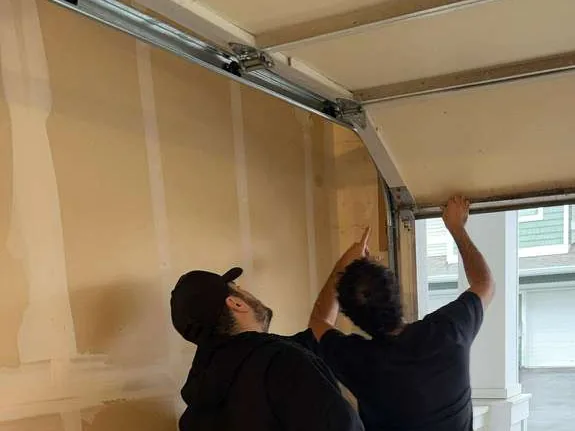
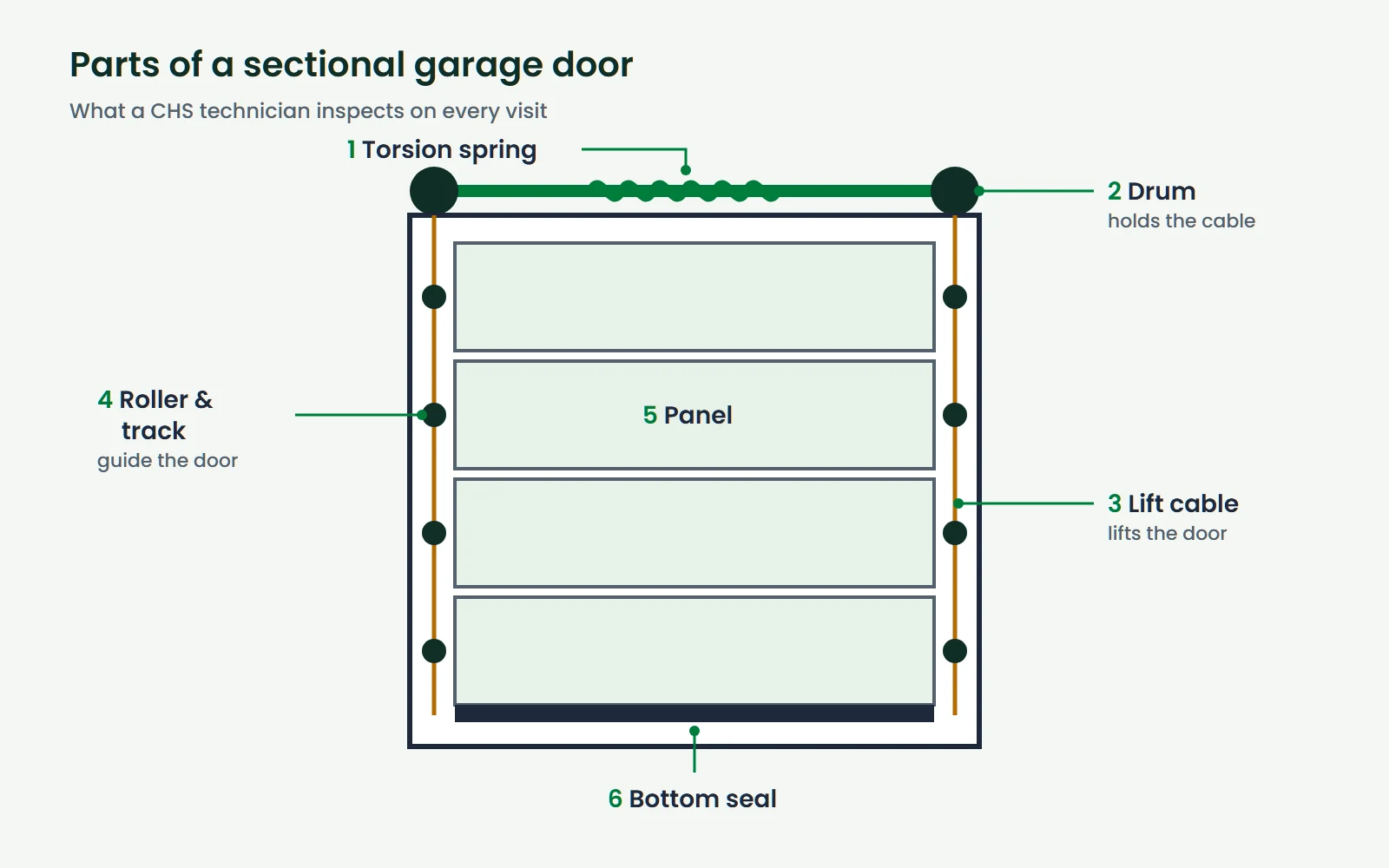
We go through the door and opener part by part and test how they work together:
- Torsion or extension springs: wear, rust, gaps and tension
- Lift cables and drums: fraying, rust and how the cable sits on the drum
- Rollers, hinges and tracks: wear, bends, loose brackets and binding
- Panels and bottom seal: cracks, dents, rot and gaps
- Door balance: whether the door stays put halfway open
- Auto-reverse: the door reverses when it meets an obstruction
- Photo-eye sensors: alignment and response
- Opener force and travel settings, emergency release, wall button, remotes and keypad
When to get a garage door inspection
An inspection gives you a clear picture before you spend money or move in.
Buying a home
Know whether the springs, opener and door are near the end of their life before closing, with the seller's permission to access the garage.
Selling a home
Fix safety issues before a buyer's inspector flags them.
Landlords and property managers
Check doors between tenants and in multi-unit garages, and keep a record of their condition.
After an impact
A car, bike or storage bin that hits the door can bend tracks and strain cables even when the door still seems to work.
Kids and pets at home
Make sure the auto-reverse and sensors work. See garage door safety for kids and pets.
Older or unserviced doors
Doors that are 10 or more years old, or that haven't been serviced in years, often have worn springs and cables.
Two safety tests you can do yourself
Door makers recommend these simple monthly tests. If either one fails, stop using the opener and call for service.
Balance test: with the door closed, pull the emergency release to disconnect the opener, then lift the door by hand to about halfway. A balanced door stays put. If it falls or rises, the springs need adjusting. Don't do this test if a spring looks broken.
Reverse test: lay a 2x4 flat on the floor in the door's path and close the door with the opener. The door should reverse when it touches the board. Then wave an object in front of a sensor as the door closes; it should stop and reverse. If not, see how to align garage door sensors.
Safety inspection or tune-up?
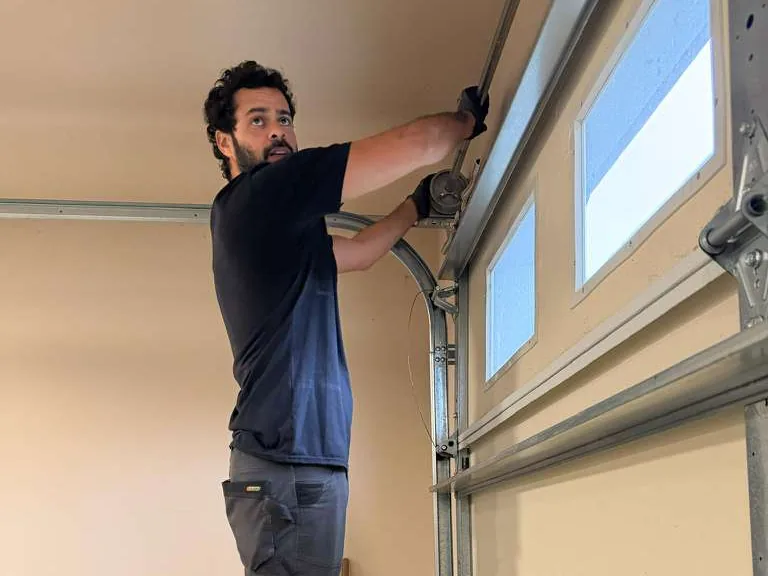
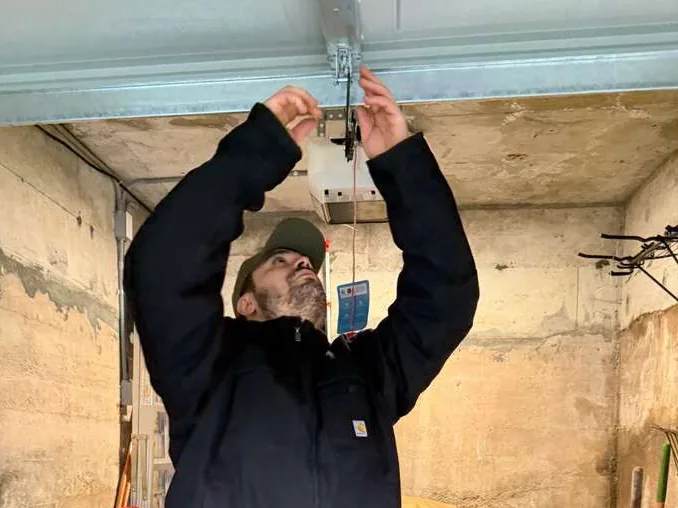
An inspection is an assessment: we check every part and test the door's safety features, then explain what's safe, what's wearing and what needs repair. A garage door tune-up is hands-on service: we lubricate, adjust the springs and opener, and tighten the hardware.
If the door works but you want to know its condition, book an inspection. If it's noisy, jerky or overdue for service, book a tune-up. Both start at the same price, and our maintenance guide covers what you can do between visits.
Garage door safety inspection price
A CHS safety inspection starts at $149. If we find anything that needs repair, you get a written estimate. Nothing is repaired without your OK.
Inspection and tune-up
From $149
Repairs found during the inspection
Free written estimate
Starting prices subject to on-site inspection
PRICING DISCLAIMER – STARTING PRICES SUBJECT TO INSPECTION
All advertised Starting At prices represent base pricing for standard services, products, or installations under typical conditions and are provided for general informational purposes only. Such prices are not guaranteed final quotes and are subject to adjustment following an on-site inspection and evaluation by a qualified technician.
Final pricing may vary based on several factors, including, but not limited to, door size, type, weight, configuration, installation complexity, existing conditions, required labor, product availability, material specifications, and differences in product brands, grades, quality, or performance.
Additional charges may apply when an inspection identifies necessary repairs, adjustments, replacement components, additional labor, unforeseen complications, concealed defects, safety concerns, or other conditions affecting the proper, safe, and reliable operation of the garage door system.
Certain products, components, or services may be required to ensure proper functionality, compatibility, and safe operation, while others may be optional upgrades or enhancements selected at the customer’s discretion.
Any additional work or charges beyond the originally quoted scope will be disclosed to the customer for review and approval before such additional work is performed.
All final pricing is subject to the customer’s approval of a written estimate outlining the applicable services, materials, and associated costs before work begins. No advertised starting price shall be construed as a binding offer or guarantee of the final service price.
What happens when you call
- Tell us what's wrongCall or send a message. A photo of the door, the spring or the opener label helps us bring the right parts.
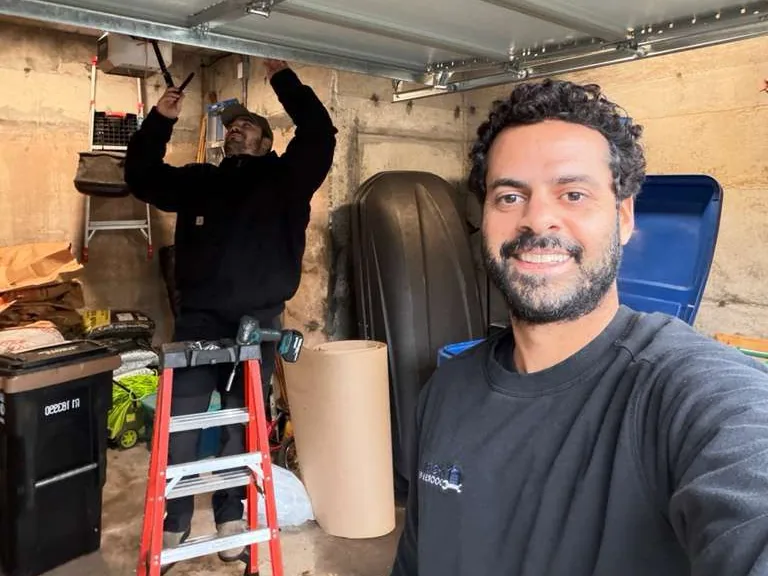
- We inspect the whole doorBalance, springs, cables, rollers, tracks, the opener and the safety-reverse system, not just the part that failed.
- You get options and a written estimateWe explain what we found and what it will cost before any work starts.
- We repair and testAfter the work we test the door's balance and the safety reverse before we leave.
Garage door safety inspection questions
Have a question that isn't here? Call (206) 245-5495.
How much is a garage door safety inspection?
Inspections start at $149. The final price depends on your door and what we find. Any repairs get a written estimate first, and you decide whether to go ahead.
What do I get after the inspection?
We walk you through what we found, part by part: what's safe, what's wearing and what needs repair. If repairs are needed, you get a written estimate.
Do you inspect garage doors for home buyers?
Yes. Book a visit with the seller's permission to access the garage, and we'll check the door and opener before closing.
Are garage door openers required to auto-reverse?
Yes. Residential openers made for the US since 1993 must have an automatic reversing system, such as photo-eye sensors. If yours doesn't reverse, stop using it and have it checked.
How often should a garage door be inspected?
Once a year for most homes, and after any impact or repair. Rental and multi-unit properties benefit from a check between tenants.
Do you inspect commercial doors?
Yes. We inspect and service commercial sectional and roll-up doors. See commercial roll-up door repair.
Book a garage door safety inspection
Call or send a message, tell us why you want the inspection, and we'll set up a visit.