Garage Door Spring Repair in Seattle, WA
Get your garage door back in action safely and efficiently. CHS Garage Door Repair offers torsion and extension spring replacement across the greater Seattle area with a comprehensive 3-year warranty.
Professional Torsion and Extension Spring Replacement
Your garage door springs do the heavy lifting of raising and lowering the door’s substantial weight. Whether you have a standard single-car door or a custom carriage house wood door, these springs are wound under extreme tension and operate under heavy stress. Over years of daily operation, metal fatigue sets in, causing the springs to lose counterbalance or snap entirely. When a spring breaks, the door becomes inoperably heavy, placing massive strain on your opener motor and counter-balance cables. Operating a door with a failing spring is extremely dangerous and can lead to structural damage or personal injury.
At CHS Garage Door Repair, we replace snapped, worn, and failing garage door springs safely. We carry commercial-grade, high-cycle springs in our service trucks to fit all door heights and weights. When you call us, our technicians will measure your door weight and spring dimensions to provide a perfectly balanced replacement, ensuring quiet operation and extending the lifespan of your garage door opener.
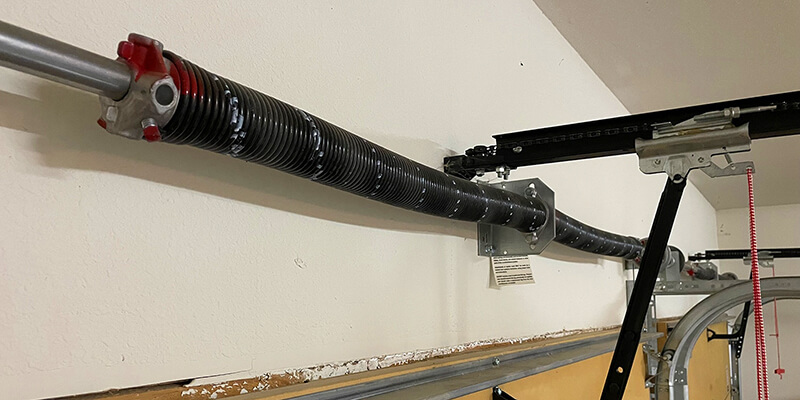
- High-cycle torsion spring system installation
- Extension spring replacement & safety cable threading
- Garage door balancing & opener travel calibration
- Center bearing plate and end bearing plate inspection
- Commercial-grade galvanized steel winding cones
- 3-year spring warranty & 1-year labor warranty
Signs Your Garage Door Spring Is Broken or Failing
Understanding when your springs are failing can save you from operational hazards. Watch for these six clear indicators.
Snapping Sound
A loud bang or popping noise from the garage is often the torsion spring snapping. When the spring breaks, it directly releases all stored tension with a massive force that echoes through the home.
Visible Gap in the Coil
A 2-inch gap in the middle of the spring above the door indicates it has broken. Look above the closed door; if you see a separation in the spring coils, it has lost all tension.
Door Won't Lift
The opener hums or starts to lift the door slightly but reverses. This safety reverse triggers because the opener logic board detects excessive resistance from the heavy, un-balanced door.
Crooked Door
One side of the door lifts more efficient or sits lower in the track. This is common with extension springs when one spring breaks and the other side lifts, shifting the door off-balance.
Loose Counterbalance Cables
Loose or hanging cables are a symptom of a snapped spring releasing tension. When the spring breaks, the cable loses its tension wrap and can jump off the drum or pulley.
Jerky or Loud Movement
Squeaking or jerky travel indicates the spring has lost its tension and needs calibration. Do not ignore these warnings; a failing spring is on the verge of breaking.
Licensed & Insured
We carry full liability and workers' compensation insurance under Washington State contractor license number #CHSGAGD820QO for protection.
Written Quotes
Our technicians provide clear, detailed written estimates upfront, with no hidden fees, extra charges, or surprise costs.
Disposal Included
We dismantle, remove, and haul away your old garage door and hardware for proper environmental recycling and disposal.
Warranty Protection
All installations are backed by manufacturer panel warranties and our comprehensive one-year parts and labor guarantee.
Spring Repair Done Right the First Time
At CHS Garage Door Repair, we believe in providing honest, clear advice to our neighbors. We do not use high-pressure sales tactics or push for a full replacement when a simple repair will suffice. If your door is structurally sound, we will explain how to fix the broken parts to save you money. If a replacement is necessary, we provide an itemized written estimate detailing all costs, including the disposal of your old door and hardware. We stand by our work. We are committed to delivering careful workmanship and clear communication on every single project.
We are fully licensed, bonded, and insured in Washington State under contractor registration #CHSGAGD820QO. Our technicians are highly trained professionals who prioritize safety and precision above all else. Every replacement door we install is backed by a comprehensive warranty, including manufacturer warranties on the panels and our own one-year warranty on parts and labor. We carry high-quality parts in our service trucks to ensure your installation is completed efficiently. Your satisfaction is our primary goal. We take pride in our local reputation and work hard to maintain it with every client.
Garage Door Spring Repair — FAQ
The cost of replacing a garage door spring in Seattle typically ranges from $180 to $350 for a single spring, and $300 to $500 for a complete double spring replacement. This cost includes the parts, professional installation, safety check, and our warranty. We always provide a detailed, written estimate before starting work to ensure complete transparency.
Yes. Garage door springs are manufactured with the same cycle rating (typically 10,000 cycles) and wear out at the exact same rate. If one spring snaps, the other has undergone the same amount of stress and is highly likely to break shortly after. Replacing both springs during the same visit saves you a second service fee and ensures your door remains balanced and safe.
No. When a spring breaks, the door loses its counterbalance, making it extremely heavy (often 150 to 300 pounds). Trying to lift the door manually can cause severe back injuries or cause the door to drop suddenly, damaging the tracks, rollers, or panel brackets. Operating the opener with a broken spring can burn out the motor or snap the drive gears. Call a garage door technician.
Torsion springs mount on a metal shaft above the door parallel to the wall, winding and storing torque. Extension springs mount along the horizontal tracks on each side, stretching and storing tension. Torsion springs are safer because if they break, they stay secured on the shaft, whereas extension springs can fly off as projectiles if they lack safety cables. Torsion springs also last longer and provide a smoother, quieter operation.
Standard builder-grade springs are rated for 10,000 cycles (one cycle is one open and close), which generally lasts 7 to 10 years depending on daily usage. We offer premium high-cycle springs rated for 20,000+ cycles, extending the lifespan to 14 to 20 years. Keeping your springs regularly lubricated with a silicone spray prevents rust and extends their cycle life.
Attempting a DIY spring repair is extremely hazardous. Torsion springs store roughly 300+ pounds of torque and require specialized winding bars, heavy-duty clamps, and mechanical training to replace safely. A slip of a winding bar can cause severe injuries, fractures, or property damage. Hiring a licensed contractor ensures a secure installation that complies with safety standards.
Local Technicians Serving Greater Seattle Since 2018
CHS Garage Door Repair has served the greater Seattle area since 2018. We are a licensed Washington State contractor (#CHSGAGD820QO) and carry full liability and workers’ compensation coverage on every job. Our service vehicles are stocked with springs, cables, rollers, and common opener parts so the majority of repairs across our service area are completed on the first visit.
We provide a written itemized estimate before any work begins and back all repairs with a 1-year parts warranty and a 3-year spring warranty. We have earned more than 353 verified Google reviews and maintain a 5.0-star average across King and Snohomish county locations.
Written Estimates
Itemized cost before work starts. No surprises on the invoice.
WA Licensed & Insured
License #CHSGAGD820QO. Liability and workers' comp on every job.
Stocked Service Vehicles
Springs, cables, rollers, and opener parts on board for most repairs.
Parts & Labor Warranty
1-year warranty on parts. 3-year warranty on spring replacements.
Broken Garage Door Spring? Do Not Operate the Door.
Operating a door with a broken spring can burn out your opener motor and bend the track. Call us for professional, spring replacement by appointment in Seattle, Bothell, Redmond, Bellevue, Kirkland, and Snohomish county.
Other Garage Door Services
Spring Repair
Torsion and extension spring replacement throughout Seattle.
Off-Track Repair
Roller and track realignment for doors that have left the track.
Opener Services
Opener repair, replacement, and smart system installation.
Preventive Maintenance
Full system inspection, lubrication, and balance check.
Bent Track Repair
Track straightening and replacement for damaged or misaligned tracks.
Door Replacement
Sectional panel replacement for dented or damaged garage doors.
Damaged Cables? Don’t Operate the Door.
We provide professional garage door replacement in Seattle, Bothell, Redmond, Bellevue, Kirkland, Lynnwood, and surrounding Snohomish and King County areas. Schedule a complete inspection and estimate today. Our team is available Sunday through Thursday to handle all your installation needs.