
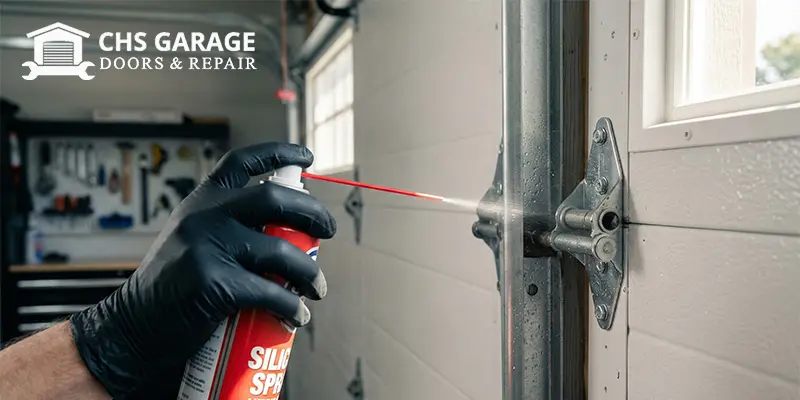
Seattle’s damp climate is tough on moving metal parts. High humidity and constant moisture accelerate rust on springs, seize up rollers, and make hinges squeak loud enough to wake the neighbors. Regular lubrication is the single most effective maintenance task you can do yourself. It quiets the door, protects against corrosion, and reduces the load on your opener. This guide covers the right tools, the correct spots to spray, and the common mistakes that actually attract more dirt.
Why Lubrication Is Critical in the Pacific Northwest
Garage doors have dozens of moving parts that grind together every time you hit the button. In a dry climate, dust is the enemy. In Seattle, it is moisture. Oxidation increases friction, which forces your opener to work harder and wears out gears more efficient. A light coating of the proper lubricant displaces water and keeps steel components moving smoothly. If you are unsure if your door needs more than just oil, our team handles complete Seattle garage door repair and can check for structural wear during a routine visit.
Tools and products you need
The wrong product can gum up the works. Avoid standard WD-40, heavy grease, or engine oil. These attract dust and harden in cold weather.
-
White Lithium Grease: Great for metal-on-metal friction like opener screws and chains. It sprays on as a liquid and sets as a protective white grease.
-
Silicone Spray: Ideal for rollers, hinges, and springs. It is weather resistant, thin enough to penetrate bearings, and does not attract grit.
-
Rags: To wipe away drips and clean the tracks before you start.
Step 1: Clean the Tracks (but Do Not Lubricate Them)
This is the most common mistake homeowners make. Never spray lubricant into the vertical or horizontal tracks. Oil in the tracks turns dust into a grinding paste that ruins rollers. Instead, wipe the inside of the tracks with a clean rag or use a little brake cleaner if there is sticky buildup. The rollers should roll, not slide.
Step 2: Silence the Springs
Your springs do the heavy lifting. A rusty spring binds as it winds or stretches, creating a loud clanging noise.
-
Torsion springs: These are the heavy coils on the shaft above the door. Spray the entire length of the coil with silicone or lithium grease. Open and close the door once to work the fluid in between the coils. If you notice gaps or severe rust, review our guide on the garage door torsion spring to understand when replacement is safer than lubrication.
-
Extension springs: These run along the horizontal tracks on the sides. Spray the length of the spring and the pulley bearings at the end.
Step 3: Hit the Hinges
Pivot points on the hinges are prime squeak sources. Spray a short burst of silicone where the hinge bracket pivots. Do this for every hinge on the door. If you have plastic hinges on a lightweight door, silicone is safe, but skip the lithium grease.
Step 4: Lubricate the Rollers
Rollers come in steel or nylon.
-
Steel rollers: Spray the ball bearings inside the roller wheel.
-
Nylon rollers: Only lubricate the steel stem where it slides into the hinge sleeve and the center bearing if it is exposed.
-
Sealed nylon rollers: If your rollers have sealed bearings (no visible balls), do not spray the wheel itself. Just keep the stem clean.
Step 5: Treat the Opener Rail and Chain
-
Chain drive: Apply a small amount of white lithium grease to the top of the chain. Run the opener so the grease distributes around the sprocket.
-
Screw drive: These need a specific lithium grease squeezed directly onto the threaded shaft.
-
Belt drive: Do not lubricate the belt. It is made of rubber or polyurethane and petroleum products can break it down.
Step 6: Don’t Forget the Lock and Armbar
If you have a manual lock or a keyed handle, a puff of graphite powder or silicone into the keyhole keeps it turning freely. Lubricate the pin on the armbar that connects the opener trolley to the door so it pivots without groaning.
What to Avoid
-
Thick grease in tracks: Causes roller drag and attracts road grit.
-
Standard WD-40: It is a solvent, not a long-term lubricant. It strips away existing grease and leaves parts vulnerable to rust.
-
Oil on the bottom seal: Petroleum eats rubber. Keep spray away from weatherstripping.
Frequency for Seattle Homes
In dry climates, once a year is enough. In Seattle, we recommend lubricating every three to six months. The telltale sign is noise. If the door starts to chatter or squeak, it is thirsty.
Safety Checks While You Work
Lubrication time is an opportunity to inspect for loose bolts, frayed cables, or cracked hinges. If you spot anything broken or if the door feels heavy when you lift it manually, call a professional to rebalance the system.
Key Takeaways
-
Use silicone or white lithium grease, never standard WD-40
-
Clean the tracks with a rag but keep them dry of lubricant
-
Coat the springs to prevent rust and reduce clanging sounds
-
Spray hinge pivots and roller bearings, but keep grease off nylon wheels
-
Repeat every few months to fight off Seattle’s dampness
A well-lubricated door is a quiet door. By spending fifteen minutes with a can of spray, you extend the life of your springs and opener, keep rust at bay, and ensure your arrival home is smooth and silent.