
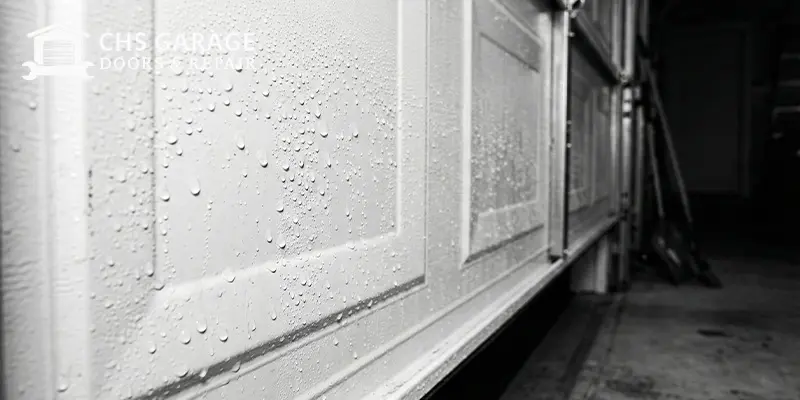
You walk into your garage on a chilly Seattle morning and notice water droplets clinging to the inside of your garage door. It looks like it has been rained on, but the water is on the wrong side. This phenomenon is known as “garage door sweating” or condensation. While it might seem like a minor annoyance, unchecked moisture is the enemy of your garage. It leads to mold growth on walls, ruins cardboard storage boxes, and accelerates rust on your door’s metal components.
In the Pacific Northwest, where humidity is a constant companion, fighting condensation is essential for protecting your home and your gear. Here is why your door is sweating and how to dry it out for good.
The Science of the Sweat
Condensation happens when warm, moist air hits a cold surface. Metal garage doors are excellent conductors of heat (or lack thereof). On a cold night, the metal skin of your door drops in temperature. When the slightly warmer, humid air inside your garage touches that cold steel, the moisture in the air turns into liquid water. It is the same effect as a cold soda can “sweating” on a hot day, just in reverse.
Why Is It Dangerous?
-
Rust: Water sitting on steel will eventually find a way through the paint. Once it reaches raw metal, oxidation begins. If you already see orange spots forming, follow our guide on how to remove rust from a garage door before it eats through the panel.
-
Mold and Mildew: That moisture drips onto the floor and evaporates back into the air, creating a cycle that feeds mold on drywall and wooden studs.
-
Freezing: In rare freezing temps, that moisture can freeze seals to the floor, jamming the door.
Solution 1: Control the Airflow
Stagnant air allows moisture to settle. Improving circulation helps keep the door surface dry.
-
Vents: Installing passive wall vents allows heavy, damp air to escape.
-
Fans: A simple oscillating fan set on a timer can keep air moving across the door surface, preventing droplets from forming.
Solution 2: Check Your Seals
If your garage door has gaps, it is letting in rain mist and damp outside air. This spikes the humidity inside the garage. Check the bottom seal (the rubber strip on the floor) and the vinyl weatherstripping around the sides. If you can see daylight, you are inviting moisture in. Replacing these seals is one of the most cost effective ways to control the garage climate. Learn the right techniques in our article on how to seal garage door gaps effectively.
Solution 3: Insulate the Door
Thin, non-insulated steel doors are the worst offenders for sweating because they get incredibly cold. An insulated door acts as a thermal barrier. The interior surface of an insulated door stays closer to the garage’s room temperature rather than the outside temperature. This reduces the temperature difference that causes condensation. If your door is a single sheet of metal, adding an insulation kit or upgrading to a sandwich-style door (steel-insulation-steel) will drastically reduce sweating.
Solution 4: Dehumidify
Sometimes the air in Seattle is just too wet. If you use your garage as a workshop or gym, a standalone dehumidifier is a game changer. It pulls moisture directly out of the air before it can settle on your tools and door tracks.
Solution 5: Check Your Floor
Concrete is porous. If your garage floor doesn’t have a vapor barrier beneath it, ground moisture can seep up through the slab and add to the room’s humidity. Sealing your garage floor with a high quality epoxy or concrete sealer stops this “rising damp” and keeps the floor dry.
Key Takeaways
-
Sweating is caused by warm, moist air hitting cold metal.
-
It leads to rust and mold if ignored.
-
Improve airflow with fans or vents.
-
Seal gaps to keep damp outdoor air out.
-
Insulation warms the door surface, stopping the reaction.