
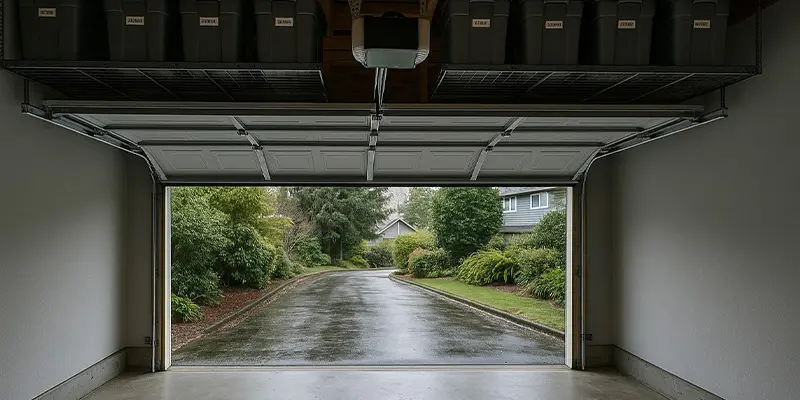
If you are like many Seattle homeowners, you want more room for bikes, skis, kayaks, seasonal bins, and tools without sacrificing parking. The empty air above your car looks Reliable for shelves and hoists, but one moving giant already lives there: your garage door. Poorly placed racks can scrape panels, snag cables, or block the opener. This guide shows you how to design overhead storage that maximizes space, preserves safe door travel, and keeps everything quiet and reliable all year.
Start with the Big Picture
Before you buy a single rack, study how your door moves. A sectional door rises and then travels horizontally along tracks until it rests beneath the ceiling. That travel path must stay completely clear, including a zone around springs, cables, and the opener rail. You will also need headroom for the top of your vehicle and comfortable aisle space for loading bins.
A sketch helps. Draw your wall, ceiling, and door in the down and up positions. Mark where the opener sits and where tracks run. This bird’s-eye view will guide every measurement you take.
Measure the Essential Clearances
-
Door height and panel count
Measure the door from floor to top section. Note how many sections you have. Taller doors occupy more ceiling when open, so plan shelf depth accordingly. -
Rise and horizontal run
With the door fully open, measure from the ceiling to the bottom of the top panel and to the bottom of the lowest panel. The lowest point of the open door sets your safe shelf height. -
Track and spring zones
Leave at least 2 inches of breathing room around vertical and horizontal tracks. Keep a wider buffer near torsion springs and lift cables. Nothing should hang or rest in these zones. -
Opener rail and light clearance
The rail from the motor head to the header bracket is an absolute no-go area. Provide space for the rail to flex slightly during operation and keep lighting fixtures from bumping into it. -
Vehicle height plus loading space
Measure your tallest vehicle with roof racks if you have them. Add 4 to 6 inches so you can slide bins in and out without scuffing the ceiling or the open door.
Choosing the Right Storage Systems
Ceiling Mounted Racks
Adjustable steel platforms work well for totes and seasonal gear. Choose models that bolt directly into joists and allow fine height adjustment so you can tune clearance above the open door. Keep rack depth shallow enough that bins cannot slide toward tracks.
Wall Mounted Shelves Near the Ceiling
When joist spacing is tricky, a wall mounted shelf can “float” above the door’s parked position. This is often ideal above the side walls where the door does not pass.
Hoists for Bikes, Kayaks, and Ladders
Use purpose built hoists with positive locking cleats. Mount them so suspended items hang between tracks rather than above the parked door. Plan swing paths to avoid handles or pedals contacting panels.
Cabinet and Rail Systems
Tall cabinets anchored to studs keep weight off the ceiling and out of the door path. For frequently used tools, a wall rail system near the back of the garage provides efficient access without overhead clutter.
If your layout is tight because the door parks too low, ask about a high lift conversion that raises the horizontal tracks closer to the ceiling for additional headroom. This overview of a high lift garage door conversion explains what is involved and when it makes sense.
Weight Limits and Fastening Basics
-
Know your joists
Determine joist direction and spacing. Use a stud finder and verify with a small pilot hole. Shelves must anchor into solid wood, not drywall alone. -
Distribute loads
Heavy items should span multiple joists. Avoid hanging concentrated weight at a single point near the opener or tracks. -
Hardware matters
Use manufacturer specified lag bolts or structural screws. Washers help prevent fastener heads from digging into bracket slots. -
Beware of concealed systems
Keep fasteners clear of electrical lines, plumbing, and the opener’s wiring harness. When in doubt, consult a licensed contractor.
Layout Tips That Prevent Door Collisions
-
Create a no storage corridor
Leave a 12 to 18 inch corridor above the entire door path. Paint a thin line or place tape markers so future projects respect this boundary. -
Shorten shelf depth above the door
If shelves must straddle the door, keep them shallow near the tracks and deeper toward the back wall where the door never reaches. -
Stop bins from migrating
Add lips or cross bars so bins cannot slide off shelves during door vibration or when you brake efficiently in wet weather. -
Mind the opener light
Keep bins and racks away from the lamp housing so cooling airflow and motion sensors are not blocked. If your opener’s light is a frequent maintenance item, this detailed guide on choosing a garage door light bulb can help with reliable, opener safe bulbs.
Safety Rules for Cables, Springs, and Sensors
-
Hands off tension parts
Torsion springs, lift cables, and end bearings store serious energy. Do not hang anything from them and do not run ropes near these components. -
Protect the photo-eyes
Mount bumper guards or small stanchions to keep stored items and bicycles from whacking the safety sensors. Misalignment is a top cause of nuisance reversals. -
Maintain line of sight
Ensure your shelves or totes do not block the keypad view from outside or the sensor beam inside. -
Avoid dangling cords
Tie up extension cords and hoist lines so they cannot snag the door or get pinched in rollers.
Moisture and Corrosion Control
Seattle’s damp air adds extra considerations. Overhead storage should never trap moisture against the door panels or insulation when parked. Leave airflow gaps between shelves and the top panel to prevent condensation. If you see water trails at the threshold, improve seals before dripping water reaches shelves. One possible fix is often a fresh bottom seal or threshold kit, and this article on how to seal garage door gaps covers common solutions.
Noise, Vibration, and Neighbor Friendly Habits
Loose racks amplify opener noise. Tighten rack bolts after the first month of use and then every six months. Place rubber isolators between metal brackets and joists to reduce vibration. If a bedroom sits above the garage, consider a belt drive or jackshaft opener for a quieter routine.
Smart Storage Zones by Item Type
-
Seasonal totes
Highest racks near the back wall. Label each bin clearly so you can grab the right one without shuffling. -
Sports gear
Bikes and skis work best on wall rails or dedicated hoists rather than hanging directly over a vehicle. -
Ladders and long items
Horizontal wall brackets above the driver’s side door opening keep them accessible and out of the door’s arc. -
Hazardous materials
Paints, fuels, and chemicals belong in vented cabinets away from openers and electronics.
Maintenance That Protects Both Door and Storage
-
Quarterly check
Open the door and watch from the side. Look for any item that wiggles toward tracks or droops into the door plane. Tighten shelf bolts and hoist anchors. -
Lubricate and tune
Clean tracks, lubricate rollers and hinges, and schedule an annual tune up so vibration stays minimal and clearances remain stable. -
Sensor and light test
Confirm safety sensors reverse on beam block and on light contact. Make sure opener lights turn on and off correctly and do not flicker when the door starts moving. -
Bin housekeeping
Rotate heavy bins lower during winter so you are not reaching overhead in wet conditions. Replace cracked totes that might spill.
When to Rethink the Plan
-
Your vehicle scrapes the open door or a rack as you pull in
-
Bins have migrated close to tracks or the opener rail
-
The opener works harder or sounds louder after installing storage
-
A hoisted item swings into the door plane even once
-
You notice condensation forming on the top panel beneath a shelf
Any of these signs mean it is time to move or modify storage before a minor nuisance becomes a major repair.
FAQs
How much weight can I hang from the ceiling
It depends on joist size, spacing, and fasteners. Many off-the-shelf racks are rated 250 to 600 pounds when installed into solid wood at multiple points. Always follow the manufacturer’s instructions and never exceed ratings.
Can I run a shelf right above the open door
Only if you can maintain a hard clearance with a physical stop that prevents bins from sliding into the door plane. Shallow shelves or a wall mounted solution are usually safer.
What if I have a very low ceiling
A jackshaft opener and a high lift kit can raise the parked door position, creating usable space. Get a site evaluation to confirm your framing and spring setup.
Is wire shelving safe near the tracks
Yes, if it is rigidly anchored and items cannot protrude toward the track. Add backstops and side lips to keep gear contained.
Do I need permits
Simple racks typically do not, but heavy built-in platforms might if they alter structure or require new electrical work. When in doubt, ask your local building department.
Key Takeaways
-
Map the door’s full travel and protect a no storage corridor above it
-
Anchor racks into joists with the right hardware and distribute loads
-
Keep all cables, springs, tracks, and the opener rail completely clear
-
Plan airflow to avoid condensation against the top door panel
-
Recheck bolts, hoists, and clearances every season and after any layout change
Thoughtful overhead storage turns wasted space into organized capacity without risking dents, noise, or breakdowns. With smart measuring, solid fastening, and a couple of careful buffers, your garage door and your gear will get along perfectly.
If ceiling clearance changes require a different mounting style, we install jackshaft and wall-mount openers as part of our garage door opener installation service. We also handle high-lift garage door conversions to maximize your vertical storage space.