
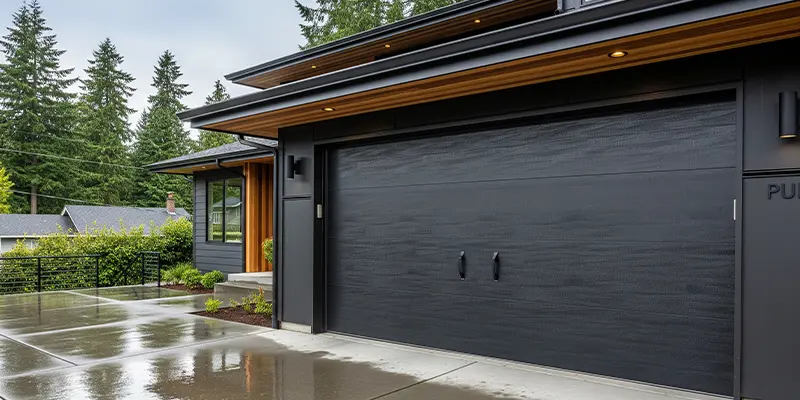
Seattle’s streets mix cedar-clad Craftsman bungalows, mid‑century gems, and sleek new builds. Your garage door sits front and center on that canvas. Choosing the right color in 2025 is not just about taste. It is about light, weather, siding materials, and the mood you want when you pull into the driveway. This guide highlights Seattle‑ready hues, finish choices, and practical prep steps that keep a fresh look longer in a damp climate.
What Is Trending in 2025
1) Deep Charcoal and Soft Black
For modern façades, saturated charcoal and soft black remain top picks. They frame the opening like a picture, sharpen lines, and pair well with concrete, fiber cement, and dark window trim. If you have a light siding color, a soft black door adds definition without looking harsh.
2) Earthy Evergreen and Moss Tones
Greens grounded in nature feel right at home in the Emerald City. Evergreen, moss, and muted sage connect the home to the landscape, especially when paired with natural wood soffits or cedar accents. These shades hide road grime well and look rich under overcast skies.
3) Warm Wood Looks
Stained cedar, walnut, and honey oak tones warm up cool gray exteriors and bring texture to contemporary homes. You can achieve this with real wood, composite cladding, or convincing wood‑look steel. A satin clear coat keeps it premium while resisting moisture.
4) Pacific Blues
From slate blue to coastal navy, blues read sophisticated and calm. They harmonize with light gray or off‑white siding and feel crisp next to silver hardware or brushed aluminum frames.
5) Modern Greige and Stone
Greige and stone neutrals are flexible on mixed‑material façades. They soften high contrast schemes and work well when house trim already uses a bold color. For townhomes, this is a safe palette that stays fresh across units.
6) Two‑Tone Frames and Panels
Another 2025 favorite is two‑tone. Use a darker frame with slightly lighter panel fields, or reverse it for a subtle custom look. Two‑tone can echo window trim and mid‑century patterns without being flashy.
7) High‑Contrast Hardware Accents
Matte black or oil‑rubbed bronze handles and hinges pop against lighter doors. On black or charcoal doors, go the other way with stainless or brushed nickel for definition.
Finish Matters as Much as Color
-
Satin gives a refined sheen, hides small surface flaws, and is easiest to keep clean.
-
Matte is design forward but shows handprints and pollen sooner.
-
Low‑gloss enamel is tough on metal doors and resists scuffs from kids and bikes.
-
Clear exterior topcoats on wood or wood‑look doors slow moisture intrusion and UV fade.
Choose exterior formulas with fungicide and corrosion inhibitors. In Seattle’s climate this extends the repaint cycle and reduces chalking.
How to Choose a Seattle‑proof Color
-
Read the light
Northwest light is cool and diffuse. Test large swatches at different times of day. Dark colors will look lighter at noon and much darker at dusk. -
Match materials and textures
Cedar siding with lots of grain prefers a contrasting smooth door. Flat fiber cement looks great with a wood‑look door that adds depth. -
Consider roof and trim
Tie the garage color to an existing element for cohesion. Match roof charcoal or echo window trim rather than adding a third unrelated color. -
Respect HOA and historic cues
If your block leans classic Craftsman, pick a period friendly palette. In a new contemporary development, darker modern tones usually gain approval.
Surface Prep That Makes Paint Last
Color choice is only half the story. Preparation determines how long your finish looks new.
-
Clean thoroughly
Wash off road film and mildew with a mild exterior cleaner. Rinse well and let dry. -
Remove rust and treat bare metal
Sand away rust to bright metal, prime with a rust‑inhibiting primer, then finish with exterior enamel. If your door already shows oxidation spots, follow this step by step guide on how to remove rust from a garage door. -
Scuff sand glossy surfaces
A light scuff promotes adhesion on steel and composite skins. -
Mask weather seals and hardware
Keep paint off the bottom seal and side weatherstrips so they remain flexible. -
Mind the weather window
Paint when temperatures are moderate and the forecast is dry for at least extended hours.
Application Tips for Metal, Composite, and Wood
-
Metal and composite
Prime bare spots only, then apply two thin coats of exterior acrylic enamel with a small foam roller. Tip off with a brush along panel edges for a sprayed look. -
Wood
Fill checks, sand smooth, stain for color depth, and finish with two coats of marine grade exterior clear. Re‑seal annually in high splash zones. -
Glass and aluminum doors
Consider factory powder‑coat colors. If painting on site, use products rated for aluminum and mask glass with precision to prevent edge bleed.
Pairing Colors with Seattle Home Styles
-
Craftsman and bungalow
Moss or evergreen doors, creamy trim, and bronze accents echo historic palettes. Warm wood looks are excellent here. -
Mid‑century modern
Two‑tone panels with charcoal frames, or a single slate blue field with simple stainless pulls. Keep lines clean and avoid busy hardware. -
Contemporary
Soft black or deep charcoal with satin finish and minimal hardware. If the façade is dark, flip to warm wood for contrast. -
Modern farmhouse
Greige or stone panels with matte black hardware and white trim keep it balanced. A cedar look door adds warmth without losing the style. -
Townhomes and ADUs
Neutral field colors with a pop of color on the house door or address numbers. This keeps continuity across units while allowing personal flair.
Care and Upkeep So the Color Stays Rich
Wash the door twice a year to remove pollen and road grime. Avoid harsh pressure washers that can lift edges or force water under seals. An annual tune‑up is the best time to spot touch‑ups, check balance, and lubricate moving parts so vibration does not crack fresh paint. See the detailed checklist on how to tune up a garage door.
FAQs
Can I paint an insulated steel door
Yes. Light scuff, spot prime bare metal, and use exterior acrylic enamel. Avoid dark colors on south facing doors if the manufacturer warns about heat gain.
How often will I need to repaint
In Seattle’s climate, a quality system lasts five to seven years on metal and composite. Clear coated real wood may need fresh topcoat every one to two years, especially on the bottom section.
What if my door already has peeling paint
Scrape failing areas to a solid edge, sand smooth, prime, and repaint the full panel for uniform sheen. Spot fixes alone can telegraph through.
Is black too bold for a small façade
Not if balanced with lighter trim and warm lighting. Choose soft black rather than true jet black for a friendlier look in low light.
Can I coordinate with smart hardware and lighting
Absolutely. A satin charcoal door paired with warm LED sconces and brushed stainless pulls reads upscale and welcoming.
Key Takeaways
-
2025 favors saturated charcoals, nature inspired greens, warm wood looks, and refined neutrals that thrive under cool Northwest light.
-
Satin exterior finishes and disciplined prep extend the life of any color in a wet climate.
-
Test large swatches, align with trim and roof, and maintain with gentle washes and periodic tune‑ups to keep curb appeal high.
Ready to install a new door in your chosen color? CHS provides garage door installation and garage door replacement across the Seattle area, with access to the full Clopay, Amarr, and Wayne Dalton color catalogs.