
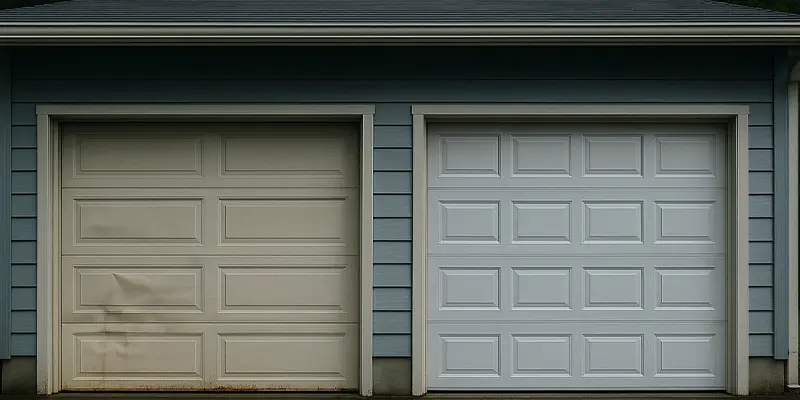
Seattle’s wet winters, salty coastal air, and occasional driveway bumps mean garage door panels take a beating. A single cracked section might look cosmetic, yet moisture can creep in, insulation can fail, and curb appeal can nosedive. Choosing between a focused panel repair and a full door replacement depends on damage extent, material age, and long-term cost. This guide breaks down decision factors, local price ranges, repair methods, and preventive steps so you can protect your investment and keep your door running smoothly.
1. Understanding Types of Panel Damage
Cosmetic Dents and Dings
Small aluminum or steel dents often come from rogue basketballs or minor impacts. Simple DIY fixes like wood-block tapping or boiling-water techniques work on light metal doors.
Structural Cracks and Warping
Cracks in wood or composite panels let rainwater swell fibers and undermine structural integrity. Repeated moisture exposure can push sections off track and strain hinges.
Rust and Corrosion
Salt-laden mist from Puget Sound accelerates corrosion on uncoated steel. Galvanized steel or aluminum panels resist rust far longer.
Insulation Failure
A compromised outer skin allows soaked insulation to slump, slashing R-value and spiking energy bills.
2. When Repair Makes Sense
| Scenario | Recommended Action | Why |
|---|---|---|
| Single dented steel panel with no rust | DIY or professional reshaping | efficient, low cost |
| One or two bent sections younger than 5 years | Individual panel swap | Keeps door warranty intact |
| Paint fade or light surface rust | Sand, prime, repaint | New paint extends life and costs far less than new door |
Average labor to replace one panel runs 200 – 500 dollars in 2025, plus the part itself. Reddit users in Seattle report paying about 300 dollars per panel and 180 dollars labor, confirming regional pricing.
3. Signs You Need Full Replacement
-
Damage affects more than 30 percent of sections
-
Door older than 15 years, nearing end of typical lifespan.
-
Insulation is outdated polystyrene and you need higher R-value for an attached garage.
-
Wood panels warped beyond planing, causing binding in tracks.
-
Repair estimate exceeds 50 percent of a comparable new door.
Full door replacement in Seattle averages 1 400 – 3 000 dollars for steel or composite, while premium glass models can top 4 500 dollars.
4. Material Choices for the Emerald City Climate
Galvanized Steel
Zinc-coated steel panels shrug off rust if the finish stays intact. Choose 24-gauge for dent resistance.
Aluminum and Glass
Naturally rustproof and modern looking, aluminum frames with tempered glass brighten workspaces. They cost more upfront but handle rain with minimal upkeep.
Composite or Fiberglass
Wood-grain composite resists swelling better than solid cedar and accepts paint well.
Polyurethane-Insulated Sandwich Doors
Foam bonds to steel skins, boosting stiffness and thermal performance while quieting operation.
5. Cost Breakdown
| Item | Low | High | Notes |
|---|---|---|---|
| Single panel part | 250 $ | 600 $ | Material and size dependent |
| Labor to swap panel | 200 $ | 500 $ | Heavier doors cost more |
| Full steel door | 1400 $ | 2800 $ | Includes removal and haul-away |
| Premium glass door | 2500 $ | 8000 $ | Cost swings with glass type |
| Paint and prep | 350 $ | 1000 $ | One-day job estimate |
Homeowners insurance usually covers sudden impact damage such as a hail-blown branch or a car bump, subject to deductible. Winter storm claims may also apply when windborne debris shatters panels.
6. Professional Repair Steps
-
Assess door balance and spring tension before removing damaged section.
-
Secure door in open position with locking pliers on tracks to prevent movement.
-
Detach hinges and struts on damaged panel, slide it out, then reverse procedure with new section.
-
Relevel tracks and tighten hardware, ensuring smooth travel.
-
Color-match paint or order factory-finished panels for uniform appearance.
7. Preventive Care for Longer Panel Life
-
Rinse door twice yearly to remove salt spray and road grime.
-
Lubricate hinges and rollers every four months to fend off rust.
-
Seal wood or composite panels with marine-grade paint to block moisture.
-
Install a rubber threshold to keep standing water off the bottom panel.
-
Schedule annual tune-ups to catch early misalignment that stresses joints.
8. Making the Final Decision
Use the fifty-percent rule: if the repair bill is half or more of a comparable new insulated door, opt for replacement. Consider future energy savings, warranty length, and resale appeal. Upgrading to a polyurethane-insulated, galvanized-steel model can add value and cut Seattle heating costs.
Key takeaway: A single dent or cracked panel rarely means total door doom, but ignoring moisture intrusion or multiple section failures can snowball into bigger expenses. Evaluate damage honestly, weigh Seattle climate factors, and choose repair or replacement that aligns with your long-term budget and comfort.