
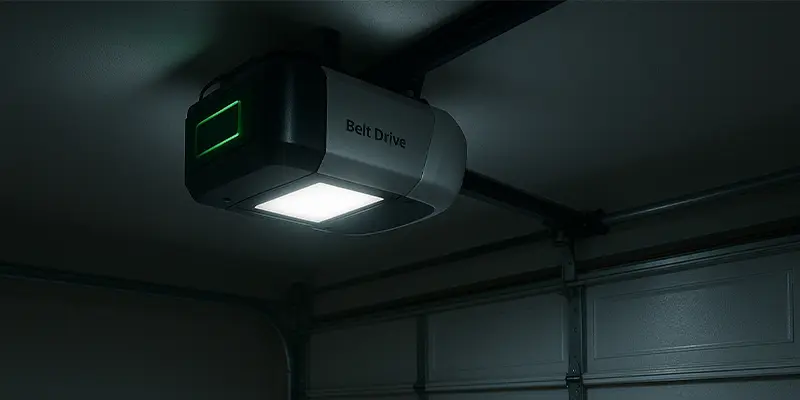
Seattle’s windstorms and heavy rains regularly knock out electricity across Puget Sound, leaving homeowners scrambling to open stuck garage doors and secure valuables. Installing a battery-backup garage-door opener keeps your door moving for up to 50 cycles when the grid goes dark, protects families from manual-release hazards, and satisfies the latest safety standards. Below you will find everything you need to know about backup power for garage doors, from code requirements and product options to testing routines and long-term maintenance.
Why Battery Backup Matters in Seattle
Frequent Outages
Gusts topping 60 mph have caused widespread outages during recent winter storms in western Washington. Seattle City Light and Puget Sound Energy both advise residents to plan for multi-hour blackouts each storm season.
Safety and Convenience
A backup battery lets you drive out, bring kids home, or close the door against looters even when the main motor has no power. It also eliminates the risks of pulling the manual release while the door is raised, which can send a 150-pound panel crashing down.
Codes, Laws, and Standards
-
CPSC Federal Rule (1993) requires an automatic-reversal system on all residential openers.
-
UL 325 sets the safety benchmark for entrapment protection and now covers unattended smart-phone operation and battery backup performance.
-
California SB 969 forces every new or replacement opener sold since 2019 to include battery backup, a trend other states are watching.
-
Washington Administrative Code addresses safe indoor battery storage and minimum fire-resistance clearances, important when locating replacement units.
How Battery Backup Openers Work
Backup models integrate a sealed 12-volt battery that automatically charges while the mains are on. During an outage, the control board switches to battery power and drives the DC motor for 20-50 full cycles depending on door weight. Smart systems like myQ send low-battery alerts to your phone so you can swap the pack before the next storm.
Choosing the Right System
| Feature | What to Look For | Sources |
|---|---|---|
| Motor Type | DC belt-drive for quiet, efficient operation | The Home Depot |
| Cycle Capacity | Minimum 20 full lifts on a single charge | Chamberlain |
| Smart App | Alerts for battery health and open/close status | Chamberlain Group |
| Easy Swappable Pack | Plug-in replacements like LiftMaster 485LM | Amazon |
| UL 325 Label | Confirms compliance with current safety rules | LiftMaster |
Chamberlain, LiftMaster, and Genie all offer belt-drive units with integrated batteries that meet these criteria.
Installation and Maintenance Tips
-
Mount the opener to solid framing and verify door balance before attaching the drive rail to avoid over-loading the battery.
-
Keep the pack above 32 °F; extreme cold shortens run time. Consider insulating the ceiling joist area if your garage is unheated.
-
Test monthly: Unplug the opener, operate it twice on battery, then reconnect power.
-
Replace every 2-3 years or after repeated low-voltage alarms, following local battery-storage clearance rules.
-
Schedule an annual tune-up to lubricate rails, adjust spring tension, and load-test the battery for capacity.
Cost and Return on Investment
A quality battery-backup opener ranges from $300 to $500 installed. The peace of mind of secure access, fewer service calls, and compliance with emerging safety laws offset the upfront expense, especially for families who rely on the garage as the primary entry.
Frequently Asked Questions
How long will the battery last during a storm?
Expect extended hours of standby and roughly 20-50 cycles depending on model and door size.
Can I retrofit my existing opener?
Some LiftMaster and Chamberlain units accept plug-in battery packs, though 1990s chain-drive models usually need full replacement to meet UL 325.
Do batteries need climate-controlled storage?
Lead-acid and lithium packs both prefer temperatures between 40 °F and 85 °F. Below freezing the capacity drops by up to 30 percent.
Will a backup satisfy insurance or code requirements?
While Washington has not yet mandated batteries statewide, insurers often grant safety discounts for UL-listed backup openers, and future code updates are likely to echo California’s rule.
Final Thoughts
Power failures are inevitable in Seattle’s stormy climate, but getting trapped by a dead garage door is not. By choosing a UL-listed battery-backup opener, testing it monthly, and replacing the pack every few years, you guarantee safe, reliable access no matter what the grid is doing.