
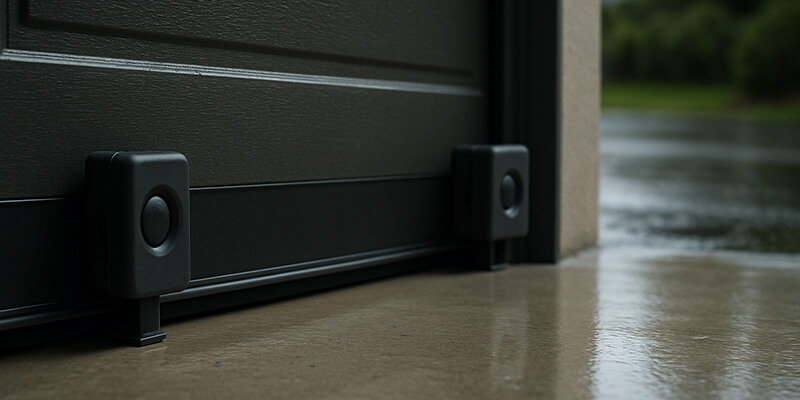
Seattle families use the garage door dozens of times each week, yet few realize how efficiently a quiet convenience can become a safety hazard for curious kids and wandering pets. National data show thousands of garage-door–related injuries every year, many involving young children who get trapped beneath a closing door or fingers pinched in moving sections. By understanding federal safety standards, installing the right sensors, and following a simple testing routine, homeowners can all but eliminate the risk.
Why Garage Door Safety Deserves Priority
Injury Statistics
ConsumerAffairs estimates that more than 10 000 Americans seek medical care annually for garage-door injuries, with toddlers and school-age children over-represented in emergency-room data. Pets are equally vulnerable because photo-eye beams are set just six inches above the floor, exactly at small-dog nose height.
Seattle Climate Challenges
Constant rain accelerates rust on springs and hinges, raising the odds of sudden part failure that could send a 150-pound sectional door slamming shut. Routine lubrication and anti-corrosion upgrades are critical in the Pacific Northwest.
Key Safety Standards Every Homeowner Should Know
-
CPSC Federal Rule (1993) – mandates an automatic reversal system plus a manual release so occupants can disengage the opener in an emergency.
-
UL 325 – the industry’s benchmark for entrapment protection. The 2021 revision added rules for smart-phone control and unattended operation to ensure remote apps cannot close a door onto a person or pet.
-
Edge Sensing Devices – optional but recommended rubber edges with pressure switches that stop and reverse on contact, meeting UL 325 Section 31.2.4.
Seven Must-Have Safety Features
1. Photoelectric Auto-Reverse Sensors
Modern openers are equipped with IR beams that trigger an professional reversal when broken. Position sensors no higher than six inches and keep lenses clean.
2. Rolling-Code Remotes
Transmitters that change their code with every use block hackers who try to capture fixed radio signals.
3. Battery Backup
Required on all new California openers and increasingly popular nationwide, backup power lets you open the door safely during Seattle windstorm outages.
4. Safety Cables Inside Extension Springs
If a spring snaps, an internal cable contains the recoil, preventing metal fragments from flying across the garage.
5. Pinch-Resistant Panels
Modern doors feature tongue-and-groove joints that keep small fingers out of harm’s way when sections bend on the track.
6. Motion-Activated LED Lighting
Built-in LEDs switch on the moment sensors detect movement, alerting children and pets that the door is about to move and deterring late-night intruders.
7. Edge Sensors
A flexible rubber strip with an internal switch adds a second layer of entrapment protection along the bottom rail.
Child Safety Best Practices
-
Mount wall-station buttons at least five feet above the floor so young children cannot reach them.
-
Teach kids to wait until the door is fully open or closed before walking underneath.
-
Conduct a monthly reversal test by placing a roll of paper towels on the threshold. The door should reverse within two seconds of contact.
Pet Safety Tips
-
Train dogs to sit behind the photo-eye line until the door is motionless, reinforcing with treats.
-
Use a smart opener app to confirm the door is closed before letting pets roam the driveway.
-
Keep food and chemicals on high shelves so spilled attractants do not lure pets under the door.
Maintenance and Testing Schedule
| Task | Frequency |
|---|---|
| Inspect sensors for alignment | Monthly |
| Lubricate hinges, rollers, and springs | Three times a year |
| Test auto-reverse using 2×4 board and photo-eye block | Every 30 days |
| Replace backup-battery | Every 2-3 years |
| Professional tune-up | Yearly |
Seattle Building Code Section 1001 requires unobstructed egress from attached garages, which includes keeping doors operational at all times.
When to Upgrade
Replace any opener built before 1993 that lacks photo-eyes. Consider a full system upgrade if the door hesitates, makes loud grinding noises, or fails the reversal test twice in a row.
How CHS Garage Door Repair Helps
CHS technicians carry UL-listed safety sensors, steel-reinforced cables, and Wi-Fi openers on every service truck, allowing most upgrades to be completed in one visit. Emergency service is available extended hours to secure doors that are stuck open.
Call CHS Garage Door Repair at (206) 245-5495 for a free 26-point safety inspection and personalized recommendations that fit Seattle’s damp climate.
Regular maintenance is the best safety measure for families with children and pets. CHS’s 25-point door safety inspection covers auto-reverse force testing, photo-eye alignment, and spring tension calibration. We also offer opener repair if your auto-reverse system isn’t responding correctly.